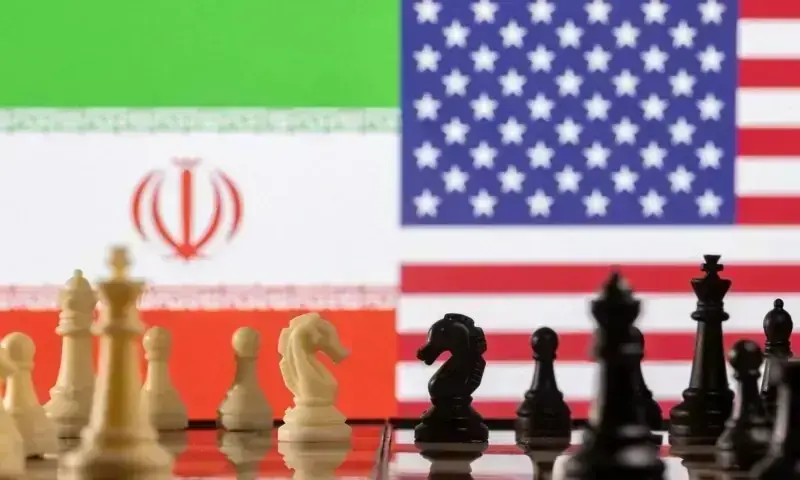
US and Iranian officials have agreed on a framework deal to end the war, halt hostilities on all fronts, and reopen the Strait of Hormuz, with the future of Iran’s nuclear programme and sanctions relief to be settled in later negotiations.
US President Donald Trump announced that the agreement was “complete” and ordered an end to the US blockade of Iranian ports, while Prime Minister Shehbaz Sharif confirmed that a peace agreement had been reached after intensive talks, adding that the official signing ceremony would take place on June 19 in Switzerland.
Iran also confirmed the framework understanding and ceasefire, saying the fighting would stop immediately, though key issues such as uranium enrichment and the release of frozen assets would be decided in subsequent discussions.
Below is a timeline of the key events that led up to the agreement.
February 28
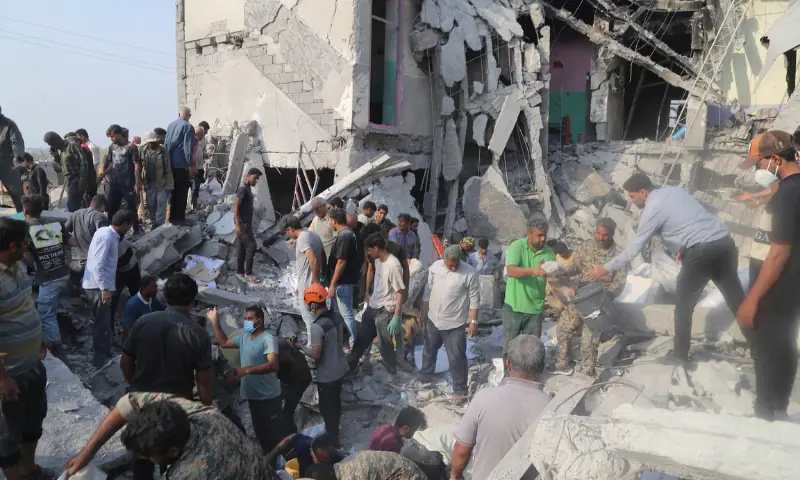
The US and Israel launched an attack on Iran via air and sea: a series of explosions in Tehran, including near the residence of the supreme leader. A US-Israel airstrike on an elementary school in southern Iran killed more than 170 people, most of them schoolgirls.
In retaliation, Iran attacked at least seven Gulf states, striking civilian infrastructure, damaging airports in the UAE and Kuwait, deploying a drone over residential areas in Qatar, and firing ballistic missiles into Jordan, while hitting an apartment building in Bahrain.
March 1
Iran confirmed that Supreme Leader Ayatollah Khamenei, several of his family members, and other top officials had been killed in Israeli-US strikes a day earlier.
Moreover, 16 people were injured in 11 explosions in Qatar, while one was injured after drone attacks on Oman’s Doqm commercial port.
March 3
An Israeli strike damaged the Islamic Republic of Iran Broadcasting complex and the Unesco site Golestan Palace. The total death toll in Iran crossed 700.
March 5
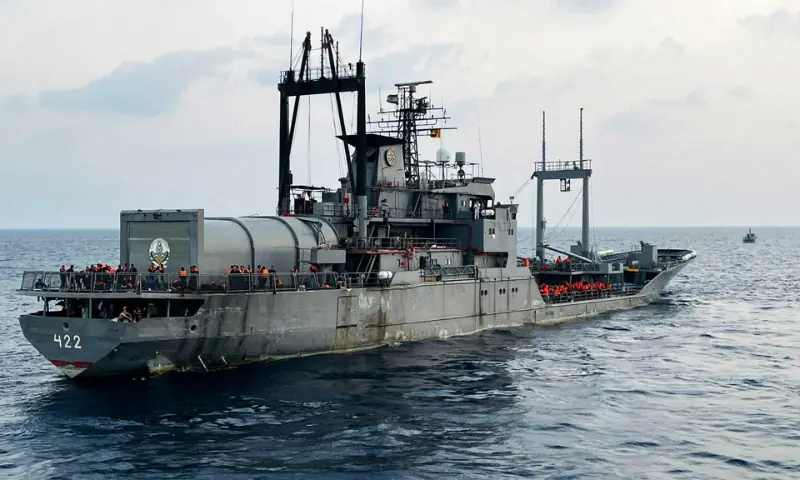
A US submarine torpedoed the Iranian frigate IRIS Dena near Sri Lanka while it was returning from a naval deployment. Iranian authorities said about 80 sailors were killed. Iranian Foreign Minister Abbas Araghchi condemned the strike as an atrocity at sea and warned that “the United States will come to bitterly regret the precedent it has set.”
March 9
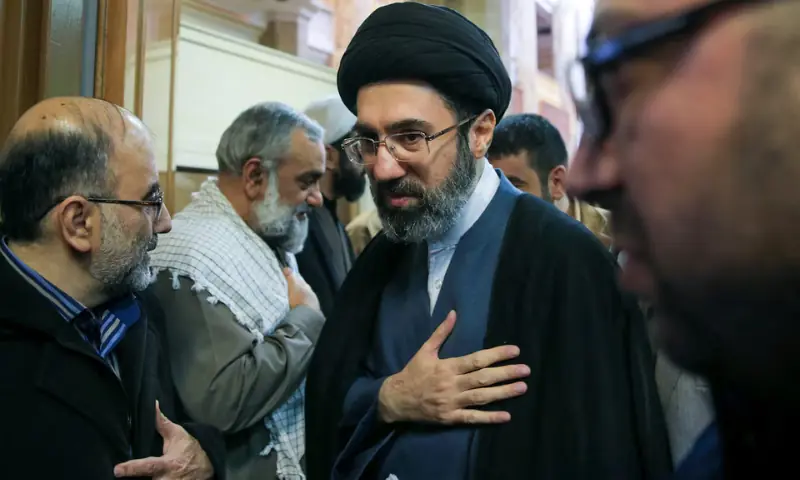
Iran’s Assembly of Experts selected Ayatollah Mojtaba Khamenei as the country’s new supreme leader.
The transition that happened without any disruption signalled both “institutional continuity and a consolidation of authority at a time when Iran remains under sustained military pressure,” according to Dawn correspondent Baqir Sajjad Syed.
Iran announced new missile strikes on Israel, with Israeli news outlets reporting that debris from interceptions fell in three areas.
March 11
At this point in the conflict, the maritime domain, particularly the Strait of Hormuz, emerged as the principal flashpoint, shaping both the military trajectory of the war and the strategic calculations of the US as the contest over oil flows and shipping lanes began to define the central logic of the conflict.
In the preceding 24 hours, at least three separate attacks were recorded against commercial vessels operating in or near the Strait of Hormuz, reinforcing the perception that Iran had begun enforcing its threat to disrupt maritime traffic through direct kinetic pressure.
March 12
The United Nations said up to 3.2 million people in Iran had been displaced since the start of the war. According to Tehran, the US and Israel had been carpet bombing civilian infrastructure, including hospitals, oil depots, and energy infrastructure.
Meanwhile, Iran continued its retaliatory attacks on Gulf countries, with several drones shot down in Saudi Arabia as well as reports of attacks on fuel tanks at Oman’s Salalah port and Bahrain.
March 13
A US air refueller was downed over western Iraq while conducting aerial refuelling operations.
It was the first-ever incident of any air force refueller being shot down. Iranian-aligned militias in Iraq claimed the attack in which all four crew members on board were killed, while another tanker was said to have been damaged in the same attack and forced to divert.
March 14
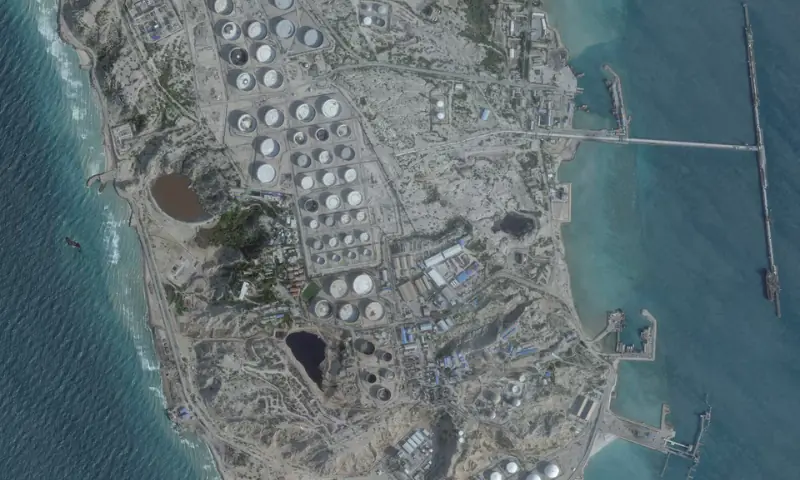
American forces struck Kharg Island, Iran’s principal oil export hub, while Tehran and its regional allies increased pressure across multiple theatres stretching from the Gulf to Iraq and Lebanon.
US aircraft conducted strikes on Kharg Island on the night of March 13, targeting what Washington described as military facilities associated with the Islamic Revolutionary Guard Corps Navy.
Meanwhile, smoke could be seen rising from two locations around Israel’s commercial hub, Tel Aviv, according to a journalist with the AFP, after blasts were heard following a warning that missiles were fired from Iran.
March 17
Ali Larijani, the head of Iran’s Supreme National Security Council was killed in an Israeli air strike.
After weeks of speculation around whether he was still alive, Israeli Prime Minister Benjamin Netanyahu appeared on television to make the announcement, where he also vowed to hunt down and “neutralise” the new supreme leader, Ayatollah Mojtaba Khamenei.
Iran’s Revolutionary Guards also confirmed the death of Gholamreza Soleimani, head of the Basij paramilitary force, in a US-Israeli air strike.
March 20
Across Iran, the Persian New Year arrived without the usual festivities associated with it. Celebrations were scaled down, with war, blackouts and economic strain shaping public sentiment. Markets remained open but subdued, and even among diaspora communities, observances lacked the usual fervour.
March 22
Trump threatened to “obliterate” Iran’s power plants if Tehran did not fully reopen the Strait of Hormuz within 48 hours, a significant escalation barely a day after he talked about “winding down” the war.
“If Iran doesn’t fully open, without threat, the Strait of Hormuz, within 48 hours from this exact point in time, the United States of America will hit and obliterate their various power plants, starting with the biggest one first!” Trump said on social media.
March 23
Trump said he had given orders to postpone any military strikes against Iranian power plants for five days, hours ahead of a deadline that threatened further escalation in the conflict.
Trump claimed in a post on his Truth Social platform that the US and Iran had had “VERY GOOD AND PRODUCTIVE” conversations over the past two days about a “COMPLETE AND TOTAL RESOLUTION OF HOSTILITIES IN THE MIDDLE EAST”.
March 24
Pakistan took centre stage in a coordinated diplomatic push alongside Turkiye and Egypt, as the trio appeared instrumental in securing a five-day pause of US plans to strike Iranian energy and power infrastructure.
At this point, over 82,000 civilian structures had been damaged or destroyed in US-Israeli strikes on Iran.
March 26
Deputy Prime Minister and Foreign Minister Ishaq Dar confirmed that “US-Iran indirect talks are taking place through messages being relayed by Pakistan”, adding that a 15-point US framework had been shared and is under Iranian deliberation, while the “brotherly countries of Turkiye and Egypt” were supporting the effort.
March 27
Trump decided to extend the “pause” on strikes against Iranian energy infrastructure until April 6, creating the appearance of a diplomatic opening.
However, experts argued it reflected an attempt to buy time amid rising military, economic and political pressures, while keeping escalation options firmly on the table.
March 29
DPM Ishaq Dar said that both the US and Iran had expressed confidence in Pakistan to facilitate talks between them amid the Middle East conflict.
He made these remarks in a televised address after a quadrilateral moot on the Middle East crisis. The meeting in Islamabad was also attended by the foreign ministers of Saudi Arabia, Turkiye and Egypt.
After the moot ended, Dar posted on X that he was pleased to welcome the foreign ministers.
April 1
Pakistan and China called for an immediate cessation of hostilities and the start of US-Iran talks, as Islamabad and Beijing unveiled a five-point initiative aimed at de-escalation in the Middle East.
The understanding was reached during talks in Beijing between DPM Dar and Chinese FM Wang Yi, held as a follow-up to their telephone conversation on the Iran war a week earlier.
April 2
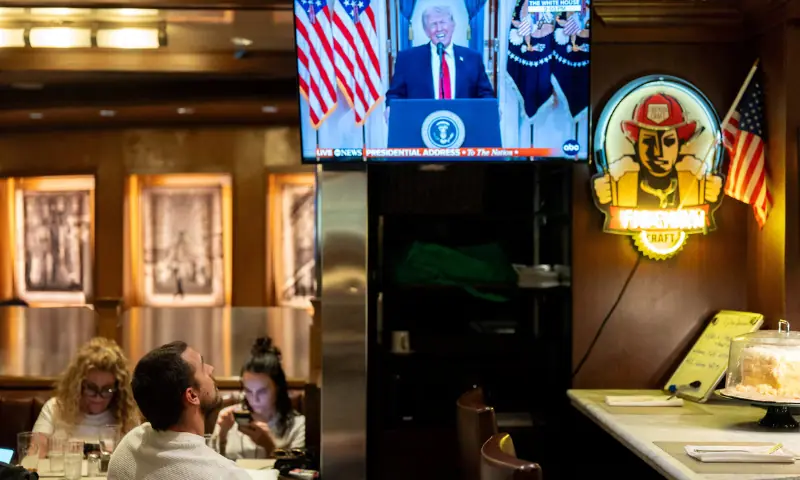
In his 19-minute address from the White House, Trump repeated his claims of severely degrading Iran’s military capabilities.
While he said the US was “getting very close” to finishing the “job” in Iran, he also voiced his determination to bomb the arch-foe “extremely hard” for another two to three weeks.
April 4
Iranian FM Araghchi pushed back at reports that Iran was unwilling to travel to Islamabad for future talks with the US, underscoring that Tehran’s position hinged on the terms and conditions of any negotiations.
“Iran’s position is being misrepresented by the US media. We are deeply grateful to Pakistan for its efforts and have never refused to go to Islamabad,” Araghchi said in a post on X.
“What we care about are the terms of a conclusive and lasting END to the illegal war that is imposed on us,” he added.
April 5
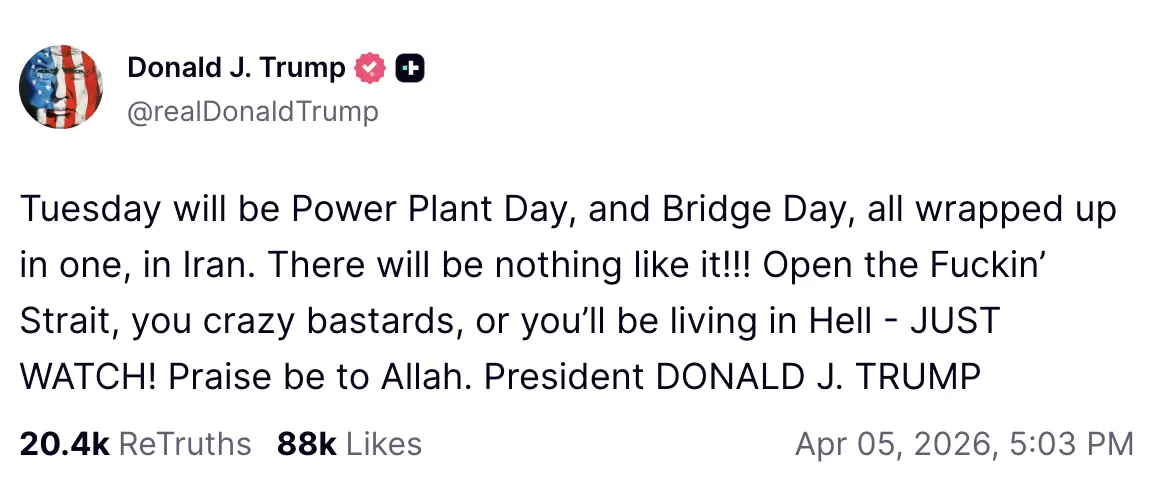
Trump ignited a political firestorm after posting an expletive-laden warning to Iran and threatening further military escalation if Tehran does not reopen the Strait of Hormuz and agree to a deal.
The Israel Broadcasting Authority said that alarms had been activated throughout the country’s north, including the port city of Haifa, after Iranian missiles were fired towards the country.
April 7
Trump threatened to entirely decimate Iran in one night after Tehran rejected a ‘ceasefire’ proposal and instead set out demands for returning to negotiations.
He warned that “a whole civilisation will die” in Iran if the country does not heed his ultimatum to accept US war demands.
In a post on Truth Social, he said, “However, now that we have Complete and Total Regime Change, where different, smarter, and less radicalised minds prevail, maybe something revolutionarily wonderful can happen, WHO KNOWS? We will find out tonight, one of the most important moments in the long and complex history of the World.”
Meanwhile, Iran reportedly conveyed a 10-paragraph reply through Pakistan, a key intermediary between Washington and Tehran.
April 8
Pakistan announced that Iran and the US, along with their allies, had agreed to an immediate ceasefire, including in Lebanon, effective immediately, and invited their delegations to Islamabad on April 10 for talks aimed at reaching a lasting settlement of disputes.
PM Shehbaz announced the ceasefire in a post on X, welcoming the move and extending his “deepest gratitude” to the leadership of both countries.
April 9
Pakistan confirmed it would host US–Iran in-person talks in Islamabad, with delegations arriving for negotiations scheduled to begin on April 10 and formal discussions set for April 11.
PM Shehbaz confirmed the visit of both delegations and said the talks aimed at a “conclusive agreement” to settle disputes. He also described his conversation with Iranian President Masoud Pezeshkian as “warm and substantive,” praising Iran’s decision to accept Islamabad’s mediation.
April 10
Islamabad was placed on high alert ahead of US–Iran peace talks, with over 10,000 security personnel deployed across the capital under a multi-tier security plan supervised by the military.
Strict security protocols were enforced under the “blue book” system for visiting delegations, while all entry points to the Red Zone were sealed except Margalla Road, which was restricted to authorised use.
April 11-12
United States Vice President JD Vance and his delegation arrived in Pakistan for historic talks with the Iranian leadership.
Early on the same morning, the Iranian delegation also arrived in the federal capital. The delegation, led by Speaker of the Iranian Parliament Mohammad Bagher Ghalibaf, was received by Deputy Prime Minister Ishaq Dar, Field Marshal Asim Munir, and other senior officials.
The talks went on for nearly 21–24 hours in Islamabad but ended without an agreement, despite multiple rounds of discussions and exchanges on key issues including nuclear policy, sanctions, regional security, and the Strait of Hormuz. Both sides confirmed that while some understanding was reached on certain points, major differences remained on core demands, preventing a final settlement.
Following the talks, Deputy Prime Minister Ishaq Dar urged both sides to remain committed to the ceasefire and continue the diplomatic process, stating that Pakistan would keep facilitating dialogue between the United States and Iran. He thanked both delegations for engaging in negotiations and expressed hope for continued talks aimed at lasting regional peace.
US Vice President JD Vance said the discussions were “substantive” but failed because Iran did not accept key US conditions, particularly regarding a permanent commitment not to pursue nuclear weapons. He described Washington’s position as a “final and best offer” and praised Pakistan for hosting and facilitating the negotiations.
Iranian officials said the talks involved detailed expert-level sessions and acknowledged progress on some issues, but noted that major gaps remained on several core points. They stressed that no agreement was expected in a single session and confirmed that the delegation had departed Islamabad following the conclusion of negotiations.
April 13
The United States military announced it would begin a blockade of all Iranian ports on Monday after peace talks between US and Iranian delegations in Islamabad collapsed.
In his lengthy social media post, Trump said his goal was to clear the strait of mines and reopen it to all shipping, but that Iran must not be allowed to profit from controlling the waterway.
Iran rejected the US threat, calling it unlawful and warning it would not yield to pressure, with officials insisting they retain control over the Strait of Hormuz.
April 14
Another round of Iran–United States dialogue was being actively pursued as Pakistan, regional capitals, and major powers stepped up efforts to prevent the fragile process from sliding back into confrontation.
April 15
The United States stated it would not join any Israeli counterattack on Iran, with President Trump warning against escalation after Iran launched a large drone and missile attack on Israel in response to a suspected Israeli strike in Damascus.
April 16
The US and Iran expressed willingness to hold talks again soon, with officials confirming that diplomatic channels remained open despite tensions. A Foreign Office (FO) spokesperson said that peace in Lebanon was essential for any negotiations, adding that Lebanon remained part of the ongoing two-week ceasefire framework currently in effect.
April 17
The United States and Iran were reported to be negotiating a three-page draft plan to end the war, which included a proposal for Washington to release about $20 billion in frozen Iranian funds in exchange for Iran surrendering its stockpile of enriched uranium.
April 20
Trump announced that US representatives were being sent to Islamabad for a second round of US–Iran peace talks, with advance teams and equipment already arriving in Pakistan ahead of the negotiations. Security was tightened in Islamabad as preparations continued for the diplomatic engagement.
Separately, tensions escalated at sea after the US claimed it targeted an Iranian vessel attempting to evade a blockade in the Strait of Hormuz, while Iranian media reported that its naval forces repelled the attempt in the Sea of Oman.
April 21
Trump announced an extension of the Iran–US ceasefire until Tehran submitted a “unified proposal” and negotiations concluded, while stating that the naval blockade of Iranian ports would continue. He said US military forces would remain on standby and the truce would be extended following requests from Pakistan’s leadership.
PM Shehbaz welcomed the decision and thanked the US for extending the ceasefire, expressing hope that both sides would reach a comprehensive peace deal during the upcoming round of talks in Islamabad. However, Iran had not yet issued a formal response, and uncertainty remained over its participation in the negotiations as diplomatic efforts continued.
April 24
Iranian Foreign Minister Abbas Araghchi arrived in Islamabad for high-level consultations with Pakistan’s leadership on regional developments and ongoing efforts toward peace, with Foreign Office officials confirming that discussions would focus on mediation efforts and stability in the region.
Meanwhile, the United States said envoys Steve Witkoff and Jared Kushner were also expected to travel to Pakistan for indirect talks mediated by Islamabad, although Iran stated it would not be holding direct meetings with the US, despite continued diplomatic engagement efforts by Pakistan.
April 25
Tehran rejected a US proposal to end the conflict, insisting it would not accept any settlement dictated by Washington and reiterating conditions for a ceasefire, including an end to hostilities, reparations, and guarantees over the Strait of Hormuz.
The White House said talks with Iran were still ongoing and “productive,” while Trump maintained that negotiations were continuing despite Iran’s public rejection of the reported proposal.
April 27
Trump said peace talks with Iran would continue through phone-based diplomacy and praised Pakistan for facilitating the process, while confirming that Washington would not send negotiators to Islamabad for now and insisting Iran already knew the conditions for any agreement.
Iranian Foreign Minister Abbas Araghchi continued regional consultations, meeting Pakistani officials in Islamabad before travelling onward to Moscow, while also engaging with several regional counterparts including Saudi, Turkish, and Egyptian officials on ceasefire and diplomatic efforts.
Tensions remained high as Iran maintained its blockade of the Strait of Hormuz and the US reported continued maritime interceptions, while international actors pushed for de-escalation and restoration of stability in key shipping routes.
April 30
Trump rejected an Iranian proposal aimed at easing tensions and said the US naval blockade on Iranian ports would continue until Tehran agreed to a nuclear deal, warning that pressure would intensify if Iran failed to comply.
Iran responded by warning of possible “unprecedented military action” over the continued shipping restrictions, while officials in Tehran accused Washington of using economic and maritime pressure to destabilise the country.
May 1
A fourth round of US–Iran talks scheduled in Rome was postponed, with Iranian officials saying the new date would depend on Washington’s approach and accusing the US of “contradictory behaviour” and continued sanctions during negotiations.
Oman confirmed the delay, citing logistical reasons, while uncertainty remained over US participation in the next round.
May 2
Trump said he was still “not satisfied” with Iran’s latest proposal conveyed through Pakistan, stating that Tehran was asking for terms he could not agree to despite signs of progress in talks. He maintained that negotiations were ongoing but stressed that no acceptable deal had yet been reached.
May 4
Trump announced the start of “Project Freedom,” under which the US would begin guiding neutral commercial ships out of the Strait of Hormuz, calling it a humanitarian effort to assist vessels trapped by the ongoing conflict. He said the operation was aimed at ensuring safe passage for civilian shipping and could also support broader diplomatic progress with Iran.
Fire broke out at a major UAE oil industry zone on the same day after a drone attack originating from Iran, authorities said, while the Gulf state’s military also intercepted three Iranian missiles over its waters and a fourth crashed into the sea.
May 5
US Defence Secretary Pete Hegseth said the United States was “not looking for a fight” with Iran and confirmed the ceasefire still held, but warned that any attacks on commercial shipping in the Strait of Hormuz would face a “devastating” response. He said US forces were providing protection for maritime traffic under “Project Freedom,” aimed at ensuring safe passage through the waterway.
May 6
Trump described clashes involving Iran and regional states as a “little skirmish,” saying they did not breach the ceasefire and reiterating that Iran would face consequences if no nuclear agreement was reached. He also maintained that the ceasefire with Iran remained intact despite continued regional tensions.
Tehran denied involvement in the widely condemned drone and missile attacks on the UAE.
May 8
Iran’s central military command accused the United States of violating the ceasefire by attacking an oil tanker and another ship. In retaliation, Tehran’s forces “immediately and in retaliation attacked American military vessels”.
May 9
US and Iranian talks were reported to be set for possible resumption in Islamabad, with mediators working to restart the stalled negotiation process. The two sides were said to be drafting a one-page, 14-point memorandum of understanding to outline a framework for a month-long dialogue aimed at ending the conflict.
May 10
Iran questioned the credibility of US diplomacy amid renewed naval clashes in the Gulf, with Foreign Minister Abbas Araghchi accusing Washington of undermining ceasefire efforts while Tehran waited for a response to the latest American proposals delivered through mediators.
Tensions persisted around the Strait of Hormuz, where sporadic maritime incidents continued despite a fragile pause in large-scale fighting.
May 11
US and Iran were set to hold a new round of nuclear talks in Oman, with Washington taking a tougher stance and demanding “no enrichment” and full dismantlement of Iran’s key nuclear facilities.
Trump said he preferred a diplomatic deal but warned that military action remained an option if talks failed, while Iran continued engagement despite widening differences and ongoing US sanctions pressure.
May 14
Iran’s Supreme Leader Ayatollah Ali Khamenei said Tehran did not seek war with the United States despite rising tensions over Iran’s nuclear and missile programmes, but ruled out any negotiations on a new nuclear deal, calling such talks “poison.”
Trump warned that Iran would suffer severe consequences if it targeted US interests, as tensions escalated following US military deployments to the Middle East and continued disputes over sanctions and maritime security in the Gulf.
May 15
Trump said the US agreed to a ceasefire with Iran “as a favour to Pakistan,” adding that the truce was reached at the request of other nations and that Washington would not have preferred it otherwise. He praised Pakistan’s leadership for facilitating the deal and said Islamabad would remain part of the ongoing diplomatic process.
May 18
Iran’s Supreme National Security Council announced the formation of a new “Persian Gulf Strait Authority” to manage operations in the Strait of Hormuz, which Tehran has effectively closed amid ongoing tensions.
May 20
Iran’s chief negotiator Mohammad Bagher Ghalibaf said the United States was attempting to restart the Middle East war, warning of a “forceful response” if hostilities resumed.
He accused Washington of maintaining military objectives despite economic and political pressure, amid renewed threats from US President Donald Trump to strike Iran unless a peace deal was reached.
May 21
Pakistan intensified its mediation efforts by sending Interior Minister Mohsin Naqvi to Tehran for a second visit in a week, where he met Iranian leadership in a bid to break the deadlock in US–Iran negotiations amid rising regional tensions.
Trump said talks were in the “final stages” but warned of renewed military action if no agreement was reached, while Iran warned that any future conflict could expand beyond the Middle East and insisted that all diplomatic options remained open.
May 22
Pakistan’s Chief of Defence Forces Field Marshal Asim Munir arrived in Tehran as part of ongoing mediation efforts between the United States and Iran, meeting senior Iranian officials and discussing proposals aimed at ending the conflict and reviving stalled negotiations.
His visit followed continued Pakistani diplomatic engagement, with Interior Minister Mohsin Naqvi also involved in high-level talks in Tehran.
US officials, including Secretary of State Marco Rubio, acknowledged Pakistan’s central role in facilitating communication between Washington and Tehran, as both sides remained under pressure to resolve disputes over Iran’s nuclear programme, sanctions relief, and security in the Strait of Hormuz.
May 24
Chief of Defence Forces Asim Munir concluded a two-day visit to Tehran after intensive mediation efforts that reportedly made progress toward a possible US–Iran understanding to end the conflict and reopen the Strait of Hormuz.
Pakistani and Iranian officials described the talks as focused on advancing a framework deal involving ceasefire continuation, limited sanctions relief, and maritime security arrangements.
Trump said negotiations were “getting closer” but remained uncertain, while Iranian officials said discussions had entered a “finalisation stage” of a memorandum of understanding, though key issues such as sanctions, nuclear limits, and control of the Strait remained unresolved.
May 25
Iranian President Masoud Pezeshkian said the final decision on any US-Iran agreement would rest with Supreme Leader Mojtaba Khamenei, reiterating that Tehran was not seeking nuclear weapons. He stressed that Iran would not compromise its “national dignity” and would provide assurances against weaponisation.
Trump said negotiations were progressing in an “orderly and constructive” manner but warned there would be no deal unless Iran’s nuclear programme was fully addressed. He added that sanctions and maritime pressure would remain until an agreement was signed, while urging his team not to rush, saying “time is on their side.”
May 26
US Central Command said American forces carried out “self-defence strikes” in southern Iran, targeting missile sites and boats allegedly attempting to lay mines near strategic waters.
Trump also said in a social media post he expected Iran to hand over its enriched uranium to the United States to be destroyed, or have it destroyed in Iran with an international witness.
May 29
US Vice President JD Vance said the United States and Iran had made “good progress” toward a ceasefire extension deal, but President Donald Trump had not yet approved the agreement.
Vance added that negotiations were continuing and expressed cautious optimism, noting that approval from Trump remained pending and the outcome was still “to be determined.”
May 30
US President Donald Trump held a two-hour meeting in the White House Situation Room to review a potential agreement with Iran, amid claims from US sources that a deal was close to finalisation. However, Tehran rejected the US framing, insisting no final agreement had been reached and accusing Washington of shifting demands and “excessive conditions.”
June 1
The United States carried out strikes on Iranian military sites over the weekend, targeting air defences and drones after accusing Tehran of hostile actions in international waters.
US Central Command said its forces responded with “swift retaliatory action” to eliminate threats and warned it would continue operations to protect regional shipping during the ongoing ceasefire.
June 2
Iran suspended indirect communications with the United States, accusing Washington of violating the ceasefire amid Israel’s expanded military operations in Lebanon. Tehran said breaches in Lebanon amounted to violations “on all fronts,” blaming both the US and Israel for escalating regional tensions.
Trump downplayed the suspension, insisting talks were still moving at a “rapid pace” while also claiming he had used intermediaries to pressure Hezbollah into halting attacks.
Meanwhile, Iranian Foreign Minister Abbas Araghchi urged Pakistan to continue its mediation efforts, even as the fragile diplomatic process appeared increasingly strained by the widening Lebanon conflict and renewed military exchanges.
June 6
US forces attacked radar sites on Iran’s coast, specifically in the city of Goruk and on Qeshm Island. This action followed the downing of four Iranian one-way attack drones launched towards the Strait of Hormuz, which the US military stated posed an immediate threat to maritime traffic.
June 10
Iran announced that a sixth round of indirect nuclear talks with the United States was being planned for June 14 in Muscat, as both sides remain deadlocked over uranium enrichment and sanctions relief. Tehran said it would present a counter-proposal to Washington’s latest draft, which it criticised for lacking meaningful economic concessions.
June 13
Prime Minister Shehbaz Sharif said a US-Iran peace deal was expected to be finalised within 24 hours, calling it closer than ever and stating that Pakistan was assisting with final technical and electronic signing arrangements. He added that a “final, agreed-upon” text had already been reached with only procedural steps remaining.
Iranian Foreign Minister Abbas Araghchi also referred to the emerging agreement as the “Islamabad memorandum of understanding,” saying all parties, including regional stakeholders and the US, had broadly approved the framework. Both sides, however, cautioned against speculation until formal signing, even as Pakistan continued its mediating role in the final stages.
June 14
Prime Minister Shehbaz Sharif said Pakistan was preparing for an “electronic signing” of a US–Iran peace framework, calling the deal “closer than ever” and expressing hope it would establish lasting peace in the region. He said the agreement could be finalised within 24 hours, with only procedural steps remaining.
Trump, however, insisted the deal was scheduled to be signed immediately and linked it to broader arrangements on the Strait of Hormuz, including de-mining operations involving Washington. He warned that while diplomacy was preferred, alternative measures remained on the table if the agreement stalled.
June 15
US and Iranian officials said they had agreed on a framework to end the conflict, lift key restrictions including the US blockade on Iran, and reopen the Strait of Hormuz, marking a major step toward de-escalation.
US President Donald Trump announced the deal on Truth Social, while PM Shehbaz confirmed that the agreement had been reached following intensive talks between the two sides.
According to PM Shehbaz, the peace deal includes an immediate and permanent cessation of military operations across all fronts, including in Lebanon, with an official signing ceremony scheduled for June 19 in Switzerland.
Leave A Comment
Comments
No comments yet. Be the first to comment!


